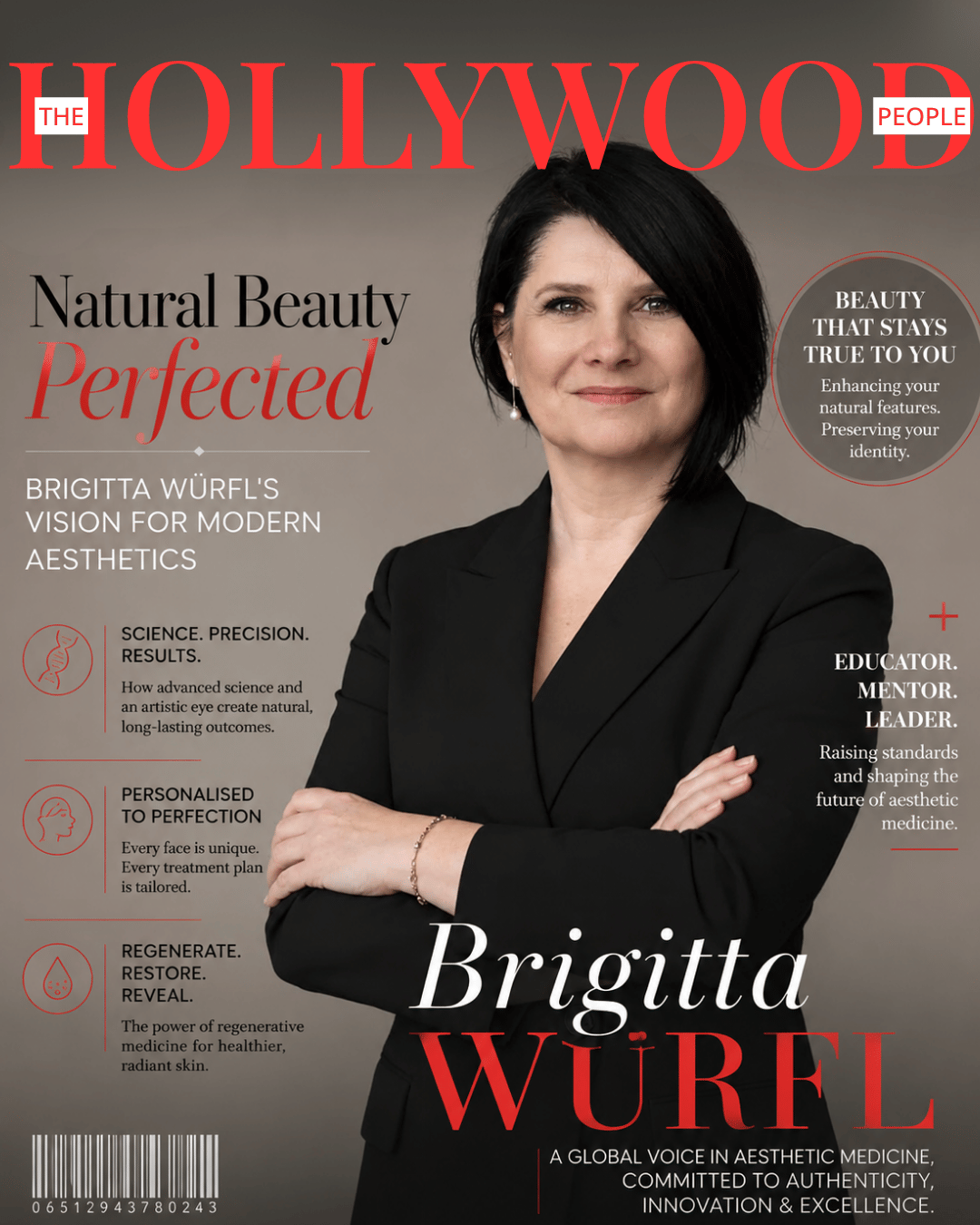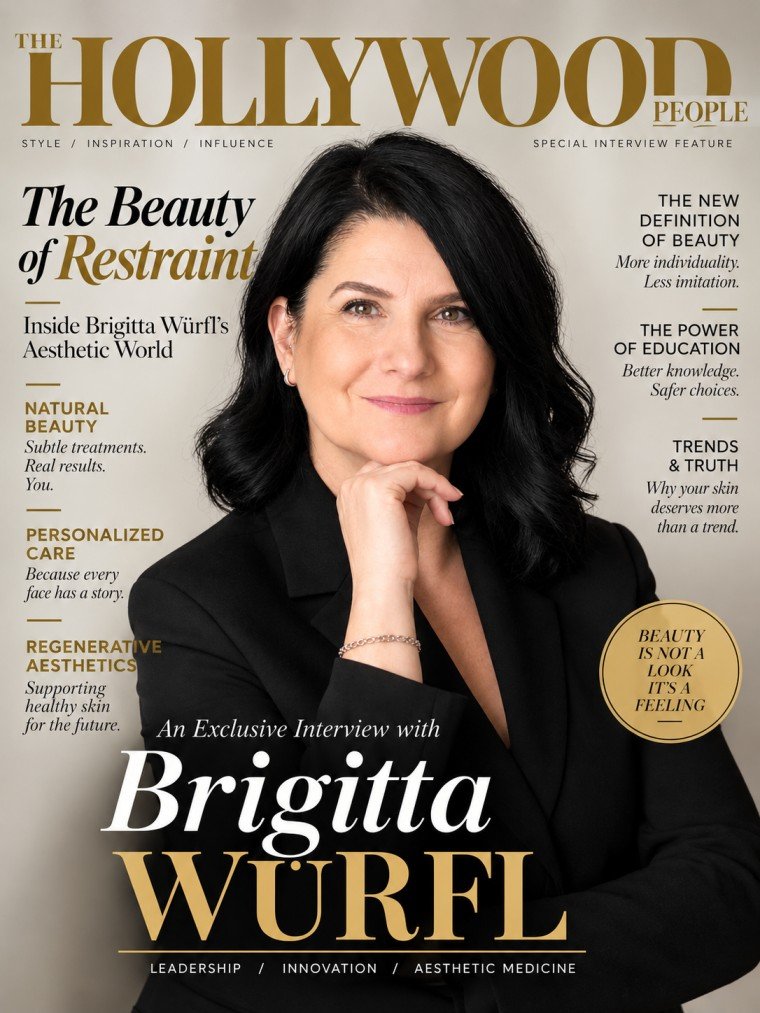
Beauty is evolving. As aesthetic medicine becomes increasingly sophisticated, more people are moving away from dramatic transformations and toward treatments that preserve individuality and produce natural-looking results. At the center of this shift is a growing appreciation for subtlety, personalization, skin health, and responsible aesthetic care.
As the founder of Skin Aesthetics Atelier, Brigitta Würfl has developed an approach that places individuality at the heart of aesthetic treatment. Her philosophy is not about changing someone’s identity but about refining and supporting the features that already make them unique.
In this conversation, Würfl discusses the changing definition of beauty, the importance of personalized treatment, regenerative aesthetics, professional education, social media trends, and why the most sophisticated aesthetic result may simply be looking like yourself.
Q: How would you describe the way beauty is changing today?
Brigitta Würfl: I believe beauty is becoming much more personal. For a long time, aesthetic treatments were often associated with visible transformations and very specific beauty ideals. Today, many people are looking for something different. They want to look refreshed, healthy, and confident without losing the characteristics that make them recognizable.
For me, this represents a very positive development in aesthetic medicine. The goal should not be to make everyone look the same. It should be about understanding what makes each individual unique and finding ways to enhance those qualities naturally.
Q: What does individuality mean in aesthetic medicine?
Brigitta Würfl: Every face has its own proportions, structure, expressions, movement, and character. There is no single formula that defines beauty.
When I meet a patient, I want to understand not only what they would like to improve but also what they want to preserve. Their anatomy, skin condition, lifestyle, previous treatments, expectations, and personal preferences all matter.
Sometimes the best treatment plan is not about doing more. It can actually involve doing less. Knowing what does not need to be changed is an important part of responsible aesthetic care.
Q: Why can subtle aesthetic results require so much precision?
Brigitta Würfl: A subtle result can be much more challenging than an obvious transformation because small adjustments can have a significant effect on facial harmony.
You have to consider proportions, symmetry, anatomy, facial movement, skin quality, and how different areas relate to one another. It is not simply about deciding where a treatment can be performed. You also have to understand where treatment may not be necessary.
For me, one of the most satisfying outcomes is when someone looks rested and rejuvenated, but people cannot immediately identify why they look different. That kind of result requires precision and restraint.
Q: Has social media influenced the way people perceive beauty?
Brigitta Würfl: Absolutely. Social media has made information about aesthetic treatments much more accessible. At the same time, it has created an environment where certain beauty trends can become extremely standardized.
People repeatedly see similar facial contours, lip shapes, proportions, and treatment results, and it can become easy to believe that everyone should look that way.
I think we need to return to individuality. A face should not have to follow a social media template. Treatment should complement someone’s existing features rather than attempt to reproduce another person’s appearance.
Q: How important is consultation when creating a personalized treatment plan?
Brigitta Würfl: Consultation is fundamental. Two patients can come to me with what appears to be the same concern, but their treatment needs may be completely different.
Their age, anatomy, skin condition, lifestyle, facial dynamics, previous procedures, expectations, and desired results all influence the decision-making process.
Listening is also extremely important. I want to understand what makes someone uncomfortable, what they hope to achieve, and which aspects of their appearance they want to retain.
That information allows treatment planning to become more thoughtful and precise.
Q: Does personalization sometimes mean advising a patient not to have a treatment?
Brigitta Würfl: Yes. Not every concern requires a procedure, and not every characteristic needs to be corrected.
Responsible aesthetic medicine involves honest communication. A practitioner should be able to explain what can realistically be achieved, what may not be necessary, and what approach makes the most sense for the individual.
The patient’s well-being and expectations should always remain central to the decision-making process.
Q: Regenerative aesthetics has become an important topic. What interests you about this area?
Brigitta Würfl: Regenerative aesthetics represents an interesting evolution because it shifts some attention toward tissue quality and biological processes rather than focusing exclusively on immediate visual correction.
For example, platelet-rich plasma, or PRP, uses components derived from a patient’s own blood and contains naturally occurring growth factors. It is used in approaches intended to support processes associated with tissue repair and collagen production.
What interests me is the broader philosophy behind regenerative aesthetics. It encourages us to think about the condition and vitality of the skin rather than simply trying to conceal visible signs of aging.
Q: Are patients becoming more interested in long-term skin health?
Brigitta Würfl: I believe there is growing interest in maintaining healthy-looking skin over time. Immediate results are still important to many people, but there is also a greater understanding that aesthetic care can be a long-term process.
A comprehensive approach may include prevention, personalized skincare, treatments focused on skin quality, regenerative approaches, and carefully selected procedures.
The objective does not have to be stopping the aging process. Instead, it can be about supporting the skin and maintaining a healthy, vibrant appearance as someone moves through different stages of life.
Q: You recently participated as a speaker at BEAUTY FORUM Day in Stuttgart. What did that experience mean to you?
Brigitta Würfl: It was a wonderful opportunity to exchange knowledge with other professionals. I was invited to speak at BEAUTY FORUM Day in Stuttgart and conducted a workshop focused on collagen stimulators, which is a subject particularly close to my professional interests.
What I appreciated most was the interaction with the participants. Their attention, questions, and professional curiosity created a valuable exchange.
I am very grateful to BEAUTY FORUM DE for the invitation and for organizing the event. Opportunities like this allow us not only to share our own experiences but also to learn from the questions and perspectives of other professionals.
Q: What was the focus of your workshop?
Brigitta Würfl: The workshop focused on collagen stimulation and modern aesthetic treatment options. There is increasing interest in approaches that concentrate on skin quality and biological processes rather than simply creating an immediate visible change.
For me, professional education is not just about teaching a particular technique. It is about helping practitioners understand the science behind emerging treatments and encouraging them to critically evaluate whether a new approach is truly beneficial for their patients.
Q: How important is continuing education in aesthetic medicine?
Brigitta Würfl: It is essential. Aesthetic medicine is developing very quickly, and new technologies, procedures, and treatment concepts appear constantly.
Technical knowledge is important, but it is only one part of responsible practice. Practitioners also need a strong understanding of anatomy, patient selection, indications, contraindications, possible complications, limitations, safety, ethics, and realistic expectations.
Continuous education allows practitioners to remain curious while also becoming more discerning.
Q: How do you determine whether a new aesthetic treatment is genuinely valuable?
Brigitta Würfl: I think innovation should always be accompanied by critical evaluation. Something should not be adopted simply because it is new, popular, or receiving attention on social media.
We need to look at the available evidence, understand the treatment’s indications and limitations, consider safety, and determine whether it makes sense for the patient.
In a field where trends can spread extremely quickly, professional judgment becomes particularly important. Innovation is valuable, but it needs to be approached responsibly.
Q: What role does professional recognition play in your work?
Brigitta Würfl: Recognition can create visibility, but I think its greatest value comes from the conversations it makes possible.
It can provide an opportunity to discuss responsible aesthetic medicine, professional standards, education, scientific development, and patient-centered care.
For me, leadership is not simply about being visible. It can also mean sharing knowledge, contributing to professional education, encouraging thoughtful discussions, and maintaining a commitment to responsible standards.
Q: Where do you think aesthetic medicine is heading?
Brigitta Würfl: I believe we will see even greater personalization.
Patients are becoming more informed and increasingly interested in preserving their identity rather than dramatically changing their appearance. This will require treatment planning that looks at the individual as a whole.
I expect approaches involving personalized skincare, prevention, regenerative aesthetics, skin-quality treatments, and carefully selected procedures to continue becoming more integrated.
The concept of beauty may become less about achieving a standardized ideal and more about maintaining authenticity.
Q: What does the future of beauty look like to you?
Brigitta Würfl: I think the future is about helping people feel confident without taking away what makes them unique.
Aesthetic medicine does not have to mean dramatic transformation. It can mean supporting someone’s appearance, improving skin quality, addressing specific concerns, and helping them feel comfortable in their own skin.
Beauty can be individual. It can evolve with age. And it does not have to follow one particular template.
Q: Finally, what does a successful aesthetic result mean to you?
Brigitta Würfl: For me, the best result is not necessarily the most dramatic before-and-after.
Sometimes the most meaningful outcome is when someone simply looks refreshed and feels more confident while still looking completely like themselves.
That is what I value about subtle aesthetic work. It is about precision rather than excess, individuality rather than imitation, and thoughtful treatment rather than simply doing more.
Ultimately, I believe the most sophisticated aesthetic result may be the one where nobody asks, “What did you have done?”
They simply see someone who looks healthy, balanced, refreshed, and confident—and most importantly, completely themselves.